Applying Engineering Expertise to Bring Clean Water to Rural Ecuador
Above Group Mechanical Engineer Joe Harris has spent the past three years volunteering alongside Engineers Without Borders and local partners to expand access to reliable water in rural Ecuador.
Estimated read time: 4–5 minutes
When most people think of engineering, they picture drawings, calculations, and construction sites.
For Above Group engineer Joe Harris, engineering has also meant hiking through the Ecuadorian Andes, working alongside local families, and helping install water infrastructure in communities where access to clean, reliable water has never been guaranteed. Many rural communities in Ecuador continue to face challenges accessing reliable drinking water, making community-led infrastructure projects an important part of improving public health and resilience.
As a professional mentor with the University of Pittsburgh Engineers Without Borders chapter, an organization that partners engineers, students, and communities to develop sustainable infrastructure projects, Joe works alongside engineering students, helping them bridge the gap between classroom theory and real-world construction. For the past three years, Joe has been part of a team working to improve access to water in a rural community in Ecuador through the chapter and the local nonprofit Proyecto Dulcepamba. It’s work that’s physically demanding, technically challenging, and deeply rewarding.
“It’s definitely not your typical engineering project,” Joe laughed.
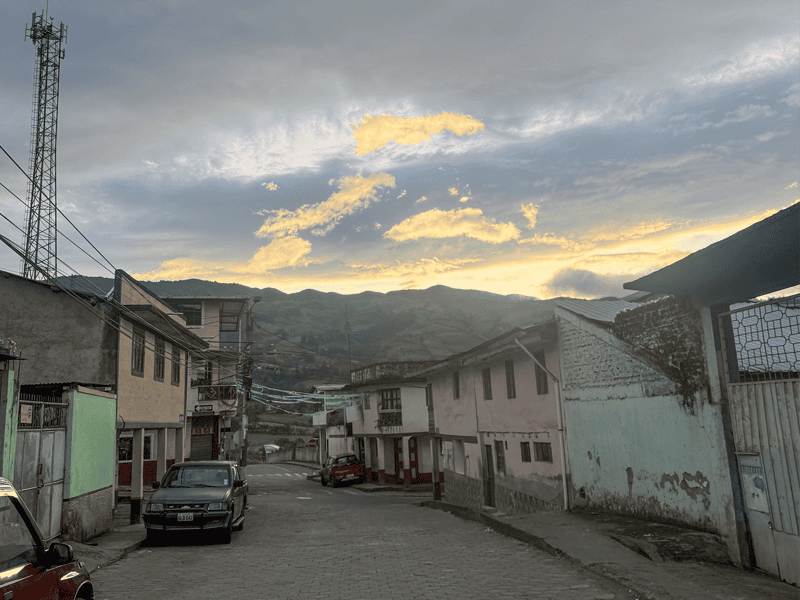
Chillanes, Ecuador served as the base for daily travel to the rural project site in the Andes.
A Different Kind of Jobsite
Getting to the community isn’t easy. After flying into Quito, Joe’s team travels for hours, passing landmarks like Mount Cotopaxi and Chimborazo along the way, winding through mountain roads before arriving in a small village tucked into the Andes.
They get to work surveying existing conditions, coordinating with local contractors, reviewing designs, and helping install new water infrastructure. This year’s trip resulted in roughly 5 kilometers of new water line, an important step toward providing reliable water service for the community school.
Unlike many engineering projects, success isn’t measured by schedules or budgets alone. It’s measured by conversations with local residents, collaboration with community leaders, and building a solution that people can maintain long after the volunteers head home.
“You can learn on the job,” Joe said, “but you can’t learn at the sake of the community.”
Local engineers, nonprofit partners, students, and community members all contribute to the design and construction process. Every decision is made with long-term sustainability in mind.
Mentoring the Next Generation
Joe’s role extends beyond plumbing design. As a professional mentor with Engineers Without Borders, he works alongside university engineering students, helping them bridge the gap between classroom theory and real-world construction.
Over the past three years, he’s watched students grow more confident with every site visit, not just technically, but as collaborators and problem-solvers. That mentorship has become one of the most meaningful parts of the experience.
Seeing the Impact
The most rewarding moments often come from things many of us take for granted. During this year’s trip, Joe visited the local school after new sections of the water system were completed.
“The government built a school and then never hooked up water…they could actually wash their dishes…not just pour a bucket of water. These people are not fortunate enough to have the opportunities that I’ve had,” he said. Being able to have this opportunity to help these people, because I’ve been fortunate enough to develop this skill set… has really just been the lesson I’ve learned the most. I’ve got so many good stories.”
It’s a simple improvement, but one that affects students and teachers every single day.
Project Highlights
- 3 years volunteering
- 5 kilometers of new water line installed
- 1 rural school connected to reliable water service
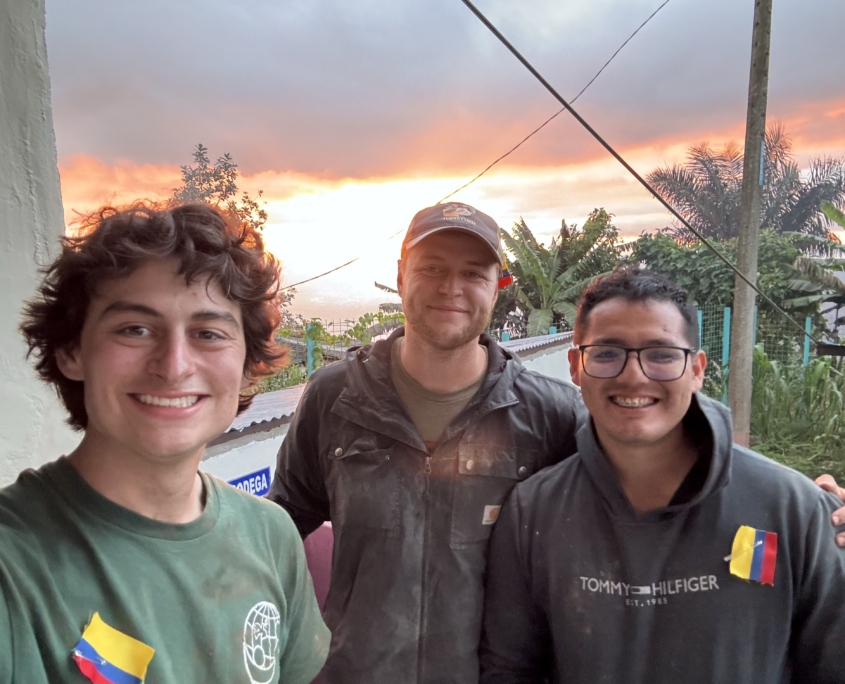
Joe Harris (middle) and University of Pittsburgh Engineers Without Borders team members
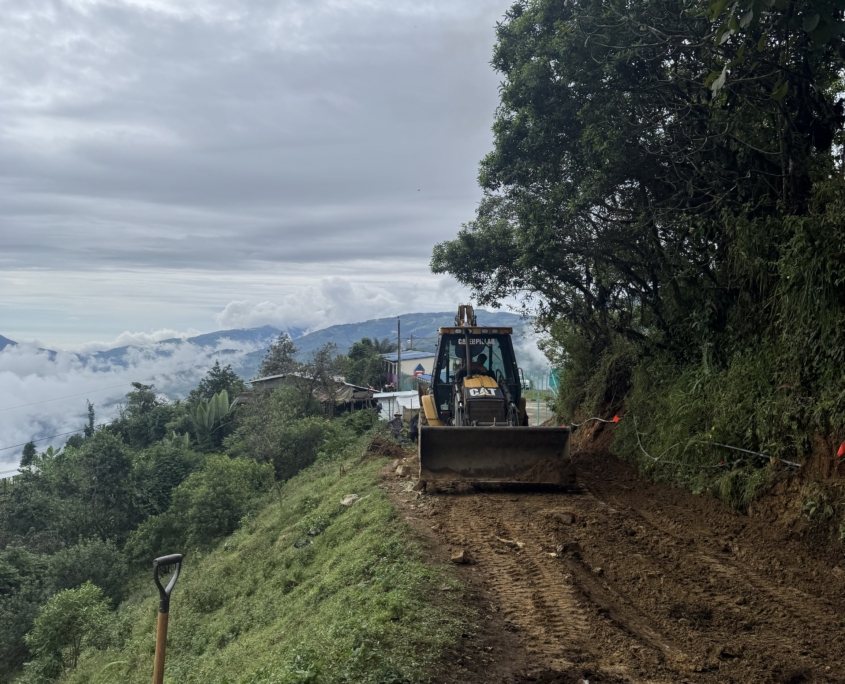
Equipment funded in part through Above Group’s support helped crews excavate a 1-meter-deep trench, creating a stable installation that will help protect the new water line from erosion.
Support That Makes a Difference
Joe shared that Above Group has supported his involvement over the past three years by providing flexibility for the time away from work and financial contributions to the project. These contributions helped fund equipment, like the excavator that was critical to this year’s construction efforts, digging a 1-meter trench to ensure the road is rated and won’t erode once installed.
He also noted that having access to professional design software has helped him create higher-quality drawings for both the students and the community.
“Being able to present high-quality drawings… has been important for teaching the students, showing the community, [and] making sure things get built properly.”
Why It Matters
Whether it’s supporting veterans through healthcare facility design in the United States or helping deliver clean water to a rural community halfway around the world, Above Group’s goal is the same: solve problems that make a meaningful difference. Above Group, Inc. embraces a Business as a Ministry philosophy, existing as a for-profit organization that invests part of its earnings to support various causes at home and abroad. Employees are key in selecting which ministries to uplift, reflecting our devotion to caring for our team and the communities we serve.